
Call for your free consultation:
(555) 555-5555In the U.S. today, roughly 1 in 3 people have a criminal record that appears on a routine background check. Because of this, there are roughly 70 to 100 million people who are affected by a negative criminal record in the following ways:
They also face an innumerable number of obstacles to living a self-sustaining life, even though they have paid their dues to society. That begs us the question, how to remove negative items from your criminal record? If you have been charged with a crime and need a criminal defense attorney, call our office at (317) 721-9858.
Close to every state has passed laws that allow people to remove negative items from their criminal record. This recognizes the impact on the economy and on the lives of families when millions are shut out of the workforce or unable to fully reintegrate into their communities. However, there is a small fraction of the tens of millions of eligible Americans that have actually benefited from the laws the allow them to remove negative criminal record items. This is because often without an expungement lawyer, the criminal record removal process is:
Negative items on a criminal record often has a history of limiting a person’s ability to pursue a productive civic life. A negative criminal record can easily:
As you can see, having negative items on your criminal history and record can have a major and lasting impact on your life.
If you want to know how to remove negative items from your criminal record, a criminal expungement is the answer. The criminal record expungement process typically clears the arrest and conviction record from the public view and alleviates the negative consequences of a criminal record. In most cases, when a criminal record is expunged, it is as if your criminal background never existed. The person with an expunged criminal history can legally answer no, if asked whether he or she has been arrested or convicted of a crime. Expungement of a person’s negative criminal records significantly eases barriers to the pursuit of a full and active participatory civic life.
Since an expungement can offer a second chance at a clean criminal background, one of the most important actions that people who have been arrested or convicted can take is to investigate their jurisdiction’s expungement procedures. By checking with your county’s criminal court, or the police agency that handled your arrest, you can get the exact guidelines for an expungement eligibility. Make certain that when you contact the court, to ask the following questions about eligibility for expungement and the procedure:
If you are finished learning how to remove negative items from your criminal record, and have determined that you need an expungement lawyer. Call our office at (317) 721-9858, we will help clean up your criminal history by getting an expungement. Don’t let the past hold you back.
If you need a criminal defense attorney to assist with crafting an aggressive defense against certain sex crimes, such as transporting child pornography. Call Indiana sex crimes defense attorney, Jesse K Sanchez at (317) 721-9858 or info@jksanchezlaw.com/
On May 20, 2021, a 29-year-old Indiana man was sentenced to 10 years behind bars after an arrest for attempting to cross the border from the United States into Canada at the Peace Bridge for transporting child pornography.
Lafayette, Indiana resident Dakota Casey, was trying to cross into Canada on June 27, 2018, when he was stopped by Canada Border Services Agency officials when according to the U.S. Attorney’s office, discovered pictures of child pornography on his cellphone. According to the reports, the images involved three minor victims.
Upon discovery of the child porn, Dakota Casey was denied entry into Canada, he and his cellphone were turned over to U.S. authorities. Officials at the U.S. Attorney’s office say Casey communicated with minors on the internet from 2017 to June 2018 who he persuaded to “produce portrayed sadistic conduct.”
Casey was convicted on the charge of transportation of child pornography.
While violent criminal crimes are frequently discussed in the media, they aren’t the most common. According to Indiana criminal defense lawyer, Jesse K. Sanchez, shoplifting, burglary, and assault and battery are much more common criminal charges. Here is information about the most typical criminal offenses in Indiana.
A criminal charge is considered as a formal accusation made by a governmental authority (usually a public prosecutor or the police) which has the assertion that somebody has committed a crime.
A charging document, which contains one or more criminal charges or counts, can take several forms which include:
As a criminal attorney, our office regularly defends our clients against a number of criminal charges in the state of Indiana.

Crimes against property happen much more often than violent offenses against individuals. Larceny and theft are property crimes that are charged as either misdemeanors or felonies. These crimes involve the unlawful taking of someone else’s property without force. Common theft charges include:

Burglary is a property crime that occurs when a person intentionally enters or remains in a building and commits a felony there. In Indiana, the penalty for burglary is the following:
A burglary which has been committed within a home
Level 4 Felony
If the Burglary committed is within a residence
A burglary which has been committed in a building that is not a residence
Level 5 Felony
If the burglary occurs within a building that is not a home
In Indiana an assault is when an act is committed that makes a person believe that physical harm is imminent. Assault is often paired with battery. Battery is when the person acts out the threat by physically attacking a person and causes a bodily injury. Battery can occur with a weapon or by deadly force without a weapon.
If you have been charged with felony for assault and battery in the state of Indiana, you could be facing the following penalties:
Class A Felony
Class B Felony
Class C Felony

Robbery is a violent crime directed against an individual. In the state of Indiana, robbery is committed when a person intends to steal or take someone else’s property from the victim’s person or in their presence against their will and by way of:
An example of a robbery occurs when an individual holds up a cashier at a convenience store or snatching a woman’s purse lead to felony charges and the need for an experienced criminal defense attorney.
If you have been charged with felony robbery or armed robbery in Indiana you could be facing the following penalties:
Robbery:
Level 5 Felony:
Armed Robbery:
Level 3 Felony
As an Indianapolis criminal defense law firm, The Law Office of Jesse K. Sanchez is here to represent and defend our clients with the utmost level of integrity and passion. Give our office a call at (317) 721-9858 for assistance with defending against criminal charges
If you are in the State of Indiana and charged with the crime of drug possession, you need to hire a drug possession lawyer, the Law Office of Jesse K. Sanchez at (317) 721-9858, or via email at info@jksanchezlaw.com. We have represented clients for drug possession, and methamphetamine charges in addition to firearms and identity theft crimes throughout the entire state of Indiana.
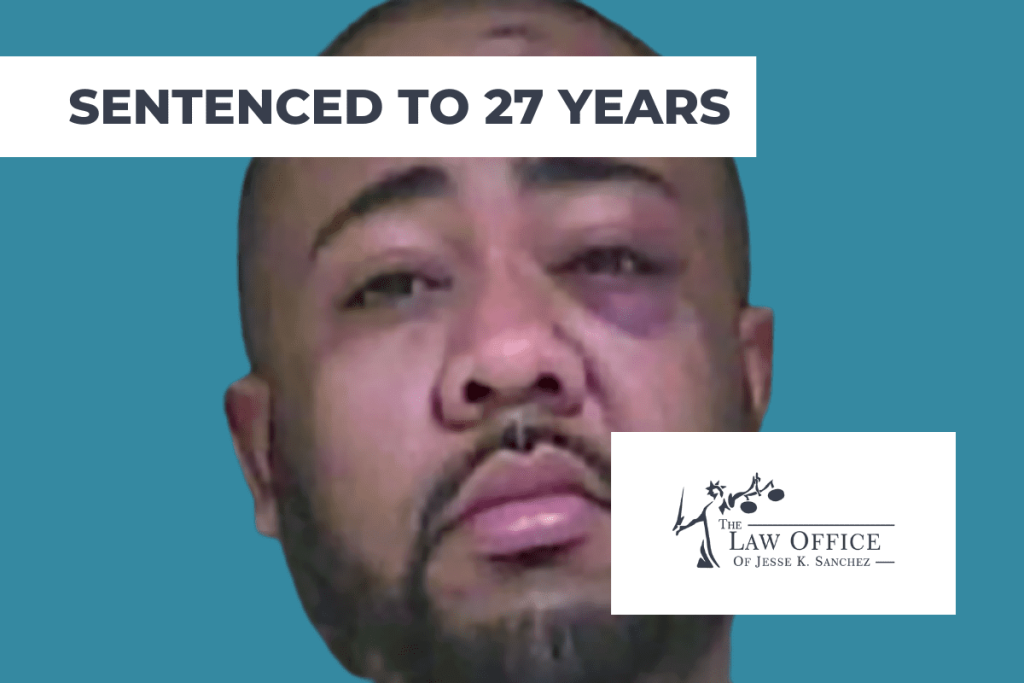
Hancock County authorities arrested an Indianapolis man along Interstate 70 last November while he was selling drugs and launder money in Hancock County. George West was sentenced to 27 years in prison for an arrest made in November of 2018.
One of the officers at the Hancock County Sheriff’s Office stopped West for erratic driving. According to court records, West, a convicted felon in California living under the name of Brandon Young, showed false identification and then became combative with the deputy. West ran from the deputy, then ended up back at the car he was driving. West tried to drive away and struck the deputy with the vehicle. The police eventually arrested him.
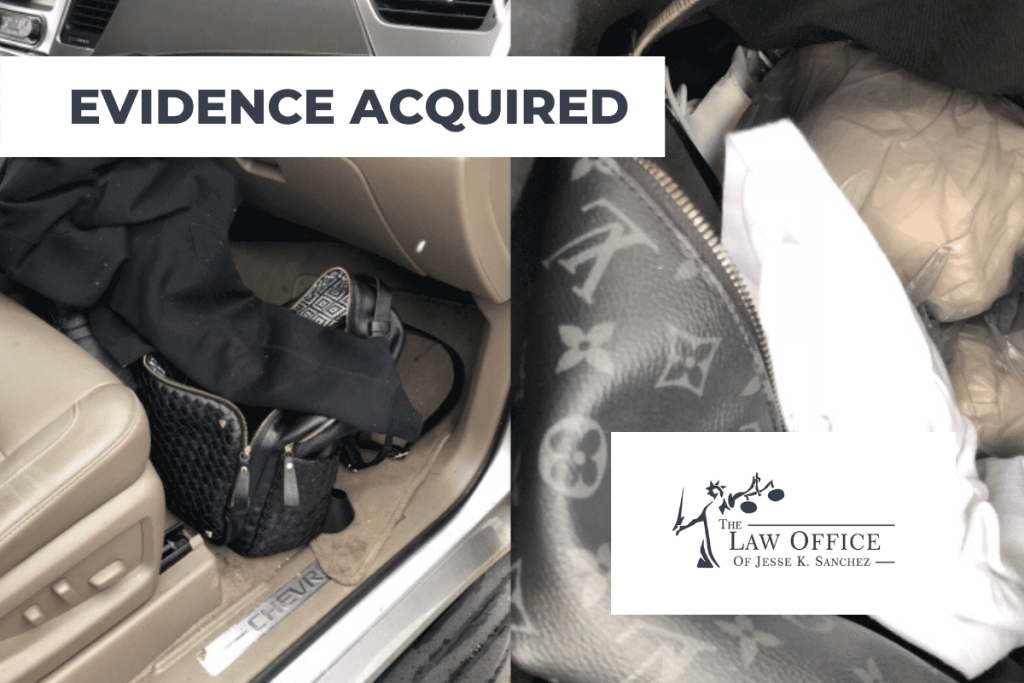
Police investigators searched the vehicle and recovered cash, fake IDs, four loaded guns, about 500 grams of heroin, and more than 300 grams of methamphetamine. At that point, law enforcement officers arrested West, and he was charged with multiple crimes, including dealing methamphetamine, resisting arrest causing injury, disarming a law enforcement officer, and battery on a law enforcement officer.
The vehicle’s passenger was 22-year-old Ashley Livingston of Akron, Ohio, who police officials and the arresting officer took into custody on a preliminary charge of dealing methamphetamine. Deputies also alleged that they discovered several pounds of methamphetamine in her purse. Upon further questioning, law enforcement obtained a search warrant and began searching the West apartment.
A further investigation into the potentially criminal activities of George West uncovered that between May 2017 and November 2018, West bought money orders with his illegal drug money to pay rent at the apartment he used for his drug dealing.
In an attempt to conceal the money laundering activities stemming from drug transactions, West then used another person to sign the lease to the apartment and placed that individual on the money orders he used to pay the rent. Rent paid totaled $29,000, according to the U.S. Attorney’s Office. The IRS, Homeland Security, DEA, IMPD, Hancock County law enforcement, and Henry County law enforcement all worked together on the investigation.
The entire sentence that George West received was 27 years and an additional 20 years, both to be served concurrently. Mr. West must also serve five years of supervised release after he serves his prison sentence.
If you are in need of a drug possession lawyer to work with you on drug possession charges in the State of Indiana, you need to contact The Law Office of Jesse K. Sanchez at (317) 721-9858 for immediate assistance in putting together the best defense for you.
Plea bargains, also referred to as plea deals or plea agreements, are commonly used negotiating tools in criminal courts. These agreements can help move cases through swiftly and may benefit both the defendant and court system. If you’re ever charged with an offense, an Indianapolis criminal attorney can help you navigate the plea bargain process. If you are facing criminal charges, call our office at (317) 721-9858 or email us at info@jksanchezlaw.com.
Generally, in a criminal case, there are three different types of pleas that an individual can explore. However, a plea bargain is an agreement made between the prosecutor and the defendant in a criminal case. In a plea agreement, a defendant agrees to accept a guilty charge. In contrast, the prosecutor agrees to drop or reduce a criminal charge or recommend the judge for a sentence the defense accepts. Laws surrounding plea bargains vary from state to state. For example, in Indiana, plea bargains are often viewed as a welcome alternative to drawn-out trials for less serious offenses.
Either the defense, represented by a criminal attorney, or the prosecutor can initiate a plea bargain. Both sides must agree to the plea agreement for the plea to be seen as valid. Typically, the proposal includes the defendant pleading guilty to a lesser charge or fewer overall charges in exchange for a more lenient sentence. Usually, the court must approve the plea bargain, and the court has the right to reject it.
Depending on your case’s details, you and your attorney may be approached with a few different forms of plea bargaining. The first is charge bargaining. This is where the defendant pleads guilty to a lesser crime, and the more severe charge is dropped. As an example, the state drops a driving while suspended charge in return for a guilty plea to driving without a valid license in possession. Sentence bargaining means the defendant will agree to plead guilty or no contest in exchange for a lighter sentence. Fact bargaining involves the defendant pleading guilty to specific facts already known in the case in exchange for the prosecution omitting more damaging evidence. In count bargaining, suspects plead guilty to one or more charges, and other charges are dropped. For instance, if a defendant is charged with assault and battery, the state may offer to drop the assault charge if the defendant pleads guilty to battery.
Plea bargains are typically conducted behind closed doors and prevent a case from ever seeing trial. While a criminal attorney will always go over the terms of the deal in detail with their client, accepting the plea typically means the defendant won’t be able to change their mind. Moreover, agreeing to accept charges means that there could be post-conviction consequences, such as a criminal record, which can affect the defendant for many years. The right attorney will work hard on your behalf to secure the best deal and defend your rights.

Even if an accused believe that they did not commit the crime, the defendant may feel inclined to consider a plea deal used by the prosecution. The long delays in the criminal justice system can suggest that a situation drags out for months, derailing an offender’s life and adding to their expenses and stress and anxiety.
Many kinds of criminal cases, such as a sex crime, domestic violence, or certain drug crimes bring a social stigma. Getting a decrease can aid preserve the offender’s partnerships with their loved ones and individuals in the area. If the defendant does require to hang out behind bars or jail, they may receive much better therapy from fellow prisoners and guards if the crime they purportedly fully committed is much less distasteful.
The criminal justice system is substantially loaded down. Judges have full calendars as well as might be concerned that they cannot successfully try every situation. Overcrowding jails also concern several courts, that fear that a truly hazardous offender might need to be released too early.
A district attorney likewise might be reluctant to go to trial if it would endanger their witnesses. A witness could be called to affirm at test, which could result in the defense impeaching their testimony if they have a criminal record or other dubious events in their past. In other scenarios, a prosecutor may feel sympathy for a criminal activity victim and wish to help them in getting the instance dealt with effectively and quietly. A victim may not intend to testify in open court as well as face the perpetrator again.
If you have been charged with a crime, you need to speak with a criminal defense attorney. Call Indianapolis defense attorney, Jesse K Sanchez at (317) 721-9858 or email our office at info@jksanchezlaw.com.
Parole is the status an inmate receives after they are released. Before the parolee completes their sentence, the parolee must agree to follow the parole agency rules. Parole violations come in two basic forms. The first are violations of the law, and the second is administrative violations. If you have been accused of violating parole, it is time to speak with a criminal attorney that handles parole violations, the Law Office of Jesse K. Sanchez at (317) 721-9858 or email info@jksanchezlaw.com.
Most criminal defense attorneys are inexperienced at handling parole violations. Many attorneys think these cases involve just negotiating a plea bargain, like they do in criminal court. However, parole violations are much more complicated than that and require special knowledge on how to handle them.
Courts usually define parole violations as either direct or technical. A direct parole violation occurs after a court sentences a person while on parole for a new crime. And a technical breach occurs after a court finds that a person violated the rules for their parole. A parole violation occurs when a parolee fails to comply with the conditions and terms of their individual parole. The result of a parole violation can result in another lengthy prison sentence!
An administrative parole violation can be anything including:
When a parolee violates, they generally have committed a variety of violations of conditions of parole. Parole can be revoked for any type of breach of the conditions of parole.
When an inmate is released on parole, they must follow all state and federal laws. In Indiana, parolees are usually required to remain in the state, where the crime was committed. Also, parolees must report to a parole officer on a routine basis. A standard condition of parole is not to violate any laws. If a parolee is accused of breaking the law, they will not get a hearing in front of the parole board until their charge is disposed by:
The second type of parole violation is an administrative violation.
An administrative violation occurs when parolees violate certain rules or conditions stated in their parole. Parolees are generally required to do the following:
Submitting to random drug testing is also a common condition of parole. Also, parolees are required to waive their Fourth Amendment rights.
Often, parole violations are minor slip-ups that are harmless. There are even some parole violations that are even committed without the parolee realizing that the violation of parole has occurred.
Possible penalties for violating parole include:
Parole violation is something that must be taken very seriously. It is important to speak to an attorney that can assist with your parole violation as soon as possible. Call Indianapolis criminal defense attorney, Jesse K. Sanchez at (317) 721-9858 or email info@jksanchezlaw.com.
First, if you find out that you have a bench warrant that you need to be cleared, contact a criminal defense attorney. Your criminal attorney will have the appropriate contacts with the court to determine the amount of your bail bond. Your attorney can arrange for you to arrive at the jail with the money for you to bond yourself out in hand, or if necessary, you will be met at the jail by a bondsman. The bail bondsman can “walk you through” the arrest and bond process without spending more time than necessary behind bars.
Common reasons an Indiana bench warrant would be issued include the following issues:
A bench warrant is issued if you have either chosen or mistakenly disobeyed a court order of some kind. Unfortunately, you don’t have to be present for this kind of warrant to be issued in your name. The purpose of this kind of court order is to make sure you agree to come to court.
As previously mentioned, missing jury duty, missing a court hearing, or even failing to make timely child support payments can result in a bench warrant being issued in your name.
Generally, what occurs is that you might have an interaction with the police. As an example, you could get pulled over for speeding, not wearing a seatbelt, or running a stop sign. When the officer checks your driver’s license, the bench warrant that you failed to clear will show up on your background check, apply to you, and lead to your subsequent arrest.
If you go to jail for FTA, the chances are that you could be in jail for a couple of weeks, potentially costing you your job, housing, even your vehicle. (If your car was impounded upon your arrest and you are unable to pay to get your vehicle from the impound lot.)
There are two types of warrants that the court can issue in your name are as follows:
1. Alias warrant
2. Capias Warrant
An alias warrant is issued when you had a court date or date to contact the court but missed, or for some municipal court citation. In this instance, you might be able to get the court clerk or court bailiff/sheriff yourself and make a deal to pay it in exchange for no jail time.
A capias warrant is issued when the judge sentenced you, and you did not follow through with executing your sentence. Generally, the only way how you can clear a warrant without going to jail is to contact a criminal attorney as soon as possible.
Chances are, if you have a warrant for your arrest, you will go to jail. The best options you have are to retain a skilled attorney to represent your interests and to act as your advocate to the court. If you need to clear up a warrant without going to jail, contact the Law Office of Jesse K. Sanchez at 317-721-9858 or email us at info@jksanchezlaw.com.
Most of the domestic cases never reach the verdict in court for many reasons. Here are the top ten reasons domestic violence cases are dismissed. If you have been charged with domestic violence, you need to retain a domestic violence attorney. Call our office for assistance at (317) 721-9858 or email us at info@jksanchezlaw.com.
Domestic violence is taken very seriously in the state of Indiana. There are certain factors that can lead to a domestic violence charge being treated as a felony or misdemeanor. Some of the mitigating factors include the following:
Again, domestic violence in Indiana is taken seriously, whether the abuser is a male or female. A domestic violence charge in Indiana is a serious crime to be charged with committing. With that in mind, it is good to have a proper defense against domestic violence charges.
A significant reason the court dismisses domestic violence cases is when the alleged Accuser stops cooperating with the case’s prosecution. Therefore, when the Prosecutor does not get enough information to decide. This means that if the alleged victim does not provide enough details, the prosecution process may not be complete because of a lack of evidence and information. For instance, if another offends a person and presents the issue to the court, it is expected they follow-up with the prosecution. However, if they are uncooperative, the case will be dismissed based on a lack of enough information, evidence, and witnesses.
The lawyer representing the defendant must ensure there is validity for the victim’s account of the issue, which led to filing the case. This means that the lawyers must ensure that the victim can rely on proof or evidence to verify the incident. For instance, if the victim claims to have been physically assaulted, the lawyer should have access to images and medical records substantiating such a claim. Failure to have such corroboration, the court will dismiss the case.
If the accused already has a lawyer, they may not be available for prosecution, and so they may not provide the information for the trial to go through. In such a case, the court will dismiss the case.
When the Accuser’s attorney emphasizes that no crime happened, they can prove that no crime occurred. If the Accuser called police officers, the Prosecutor could explain why the Accuser called when no crime occurred. In most instances, this happens when the Accuser had fabricated the allegations.
When the Accuser has a history of making false accusations or disavow the claims later, the court may dismiss any domestic violence by such persons and justify the dismissal by accounting for the Accuser’s false accusation history.
When a witness reports an incident as domestic violence, they may have interpreted the incident from their experience after witnessing an incident. In such a case, the court dismisses such reports since they do not present the actual incident.
If the Prosecutor believes that the case will not go through the trial or that they lack sufficient evidence, the Prosecutor can dismiss the case.
If the Prosecutor believes that the evidence is not convincing, they may dismiss the case until the Prosecutor finds convincing proof. When the victim tells many inconsistent stories, it may make the Prosecutor lose confidence in the case, hence dismissing it. When there is no standard story to the case, the Accuser fabricates the issue so that the Prosecutor will ignore it. Another reason the court will dismiss a domestic violence case is if the Accuser stands to gain. For instance, if the abuser plays victim to gain maliciousness, the Prosecutor can ignore such a case.
If you need an Indianapolis, Indiana domestic violence lawyer to help defend against domestic violence charges in Indiana, call our office immediately. Time is of the absolute essence. Call us at (317) 721-9858, we are here and ready to help with your domestic violence defense.
Child exploitation is a charge that is specifically unique to the State of Indiana. There is a high probability that a crime that would be prosecuted as child exploitation, would be charged as a much more severe sex related crime in any other state. A conviction for child exploitation potentially comes with the following consequences:
The Indiana Code § 35-42-4-4 defines two degrees of the crime child exploitation, each with associated punishments. The degree of the crime depends on the specifics of the crime committed, with higher degrees of the charge generally receiving harsher punishments.
Indiana law allows child exploitation to be enforced as a statutory charge. A statutory charge means that this charge can be applied to cases in which the victim is younger than the Indiana Age of Consent, even if the victim willingly engages in sexual relations with the defendant.
Child Exploitation in Indiana is a Class C Felony when:
A computer is made available to another person that contains matter that depicts or describes sexual conduct by a child less than 18.
Or,
When an individual knowingly manages, produces, sponsors, creates, disseminates or exhibits (or offering to disseminate or exhibit) matter that includes, depicts or describes sexual conduct by a child under age 18.
A Class C Felony for child exploitation in Indiana comes with a maximum of 4 years in prison; up to a $10,000 fine, probation, therapy, and possible restitution with community service.
Child Exploitation is a Class D Felony when:
There is the intentional possession of materials that depict or describe sexual conduct by a child under 16.
A Class D Felony for child exploitation in Indiana comes with a maximum of 1.5 years in prison; and up to a $10,000 fine, probation, therapy, and possible restitution with community service.
Are you or a family member currently being charged with child exploitation in Indiana? It is a serious sex crime to be charged with committing. You need to speak with an Indiana sex crimes attorney as soon as possible. Contact the Law Office of Jesse K. Sanchez at (317) 721-9858 or info@jksanchezlaw.com for immediate assistance. Time is of the essence.
Being arrested for a DUI is a serious matter, with potentially dire consequences. Although every DUI case is different from each other, they all follow the same steps. The article below discusses the standard features of a DUI arrest and investigation. By going through each step, you will learn more about the process until you get to court. It’s best to hire a DUI attorney at the beginning of the process. Give our office a call at (317) 721-9858!
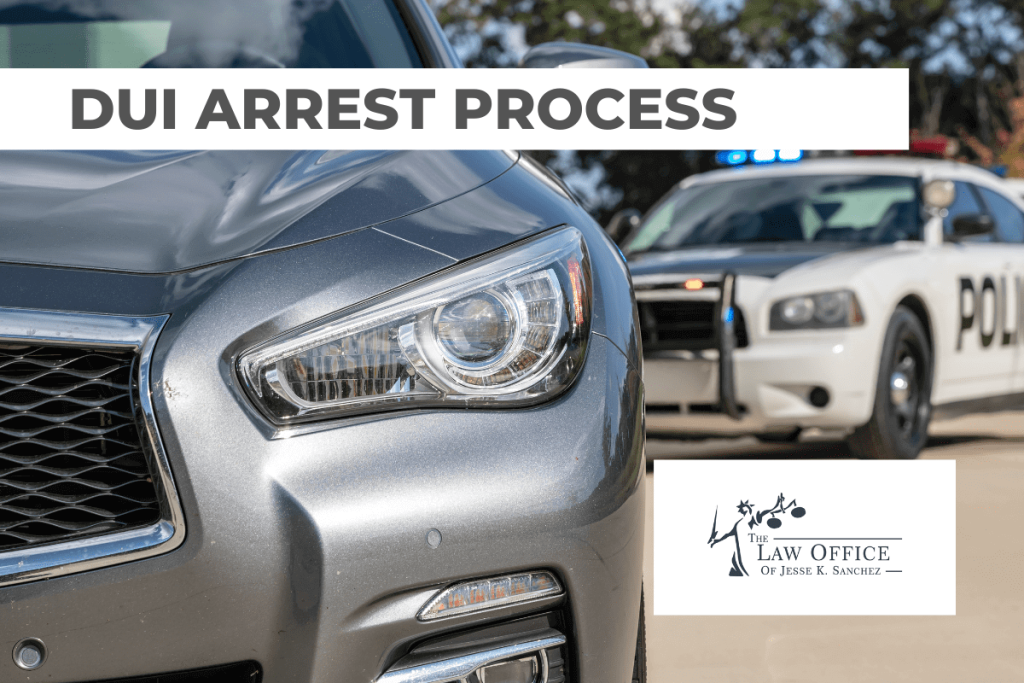
Before you are arrested for a DUI, the DUI stop is the first step of a DUI case where the officer pulls the motorist over or stops him. DUI or OWI traffic stops typically happens once they see signs of traffic violations or impairment. If traffic officers have a reasonable cause to stop you, it is legal.
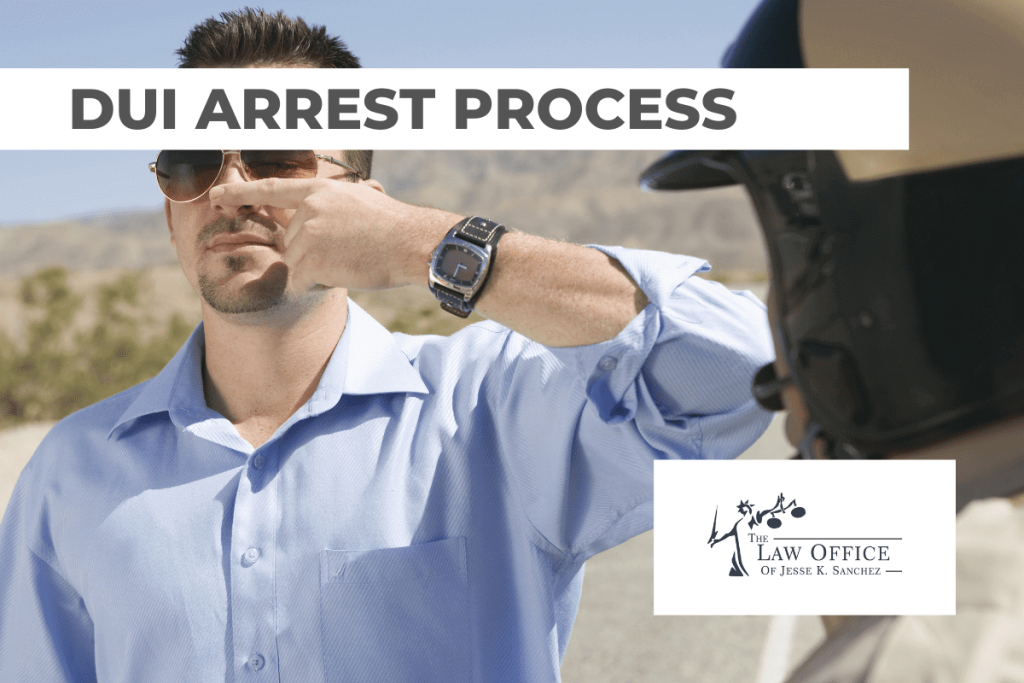
Once you stop, the traffic officer will come to you and typically ask for your driving license and registration. At this moment, the traffic officer is keen to note if, during this interaction, there are any signs of impairment or smell of either marijuana or alcohol. Any observation of either will be present in the police report, and you will see in when arraigned in court.
During police questioning, you will be asked if you had anything to drink by the traffic officer. During police questioning, you should learn to remain silent for once you say that you only drank a beer or two; the investigation does not stop.
Generally, once the police officer has probable cause to believe that there is incriminating evidence in your car, they go ahead and search it. A good example is when an officer smells or sees things that make him suspect that there are drugs inside the car, they can search not only the interior but also the trunk of your vehicle.
Once a traffic officer suspects drunk driving, he will surely need to confirm his suspicion using roadside tests. There are two notable roadside tests namely breathalyzer and field sobriety tests (FTATs)
The police report usually is available to the defendant until he or she is arraigned in the court of law, in most states. A police report is a description of what happened, according to the arresting officer. Court appearances are the sole reason why most people are curious about what is on the police report. An experienced DUI attorney, like Jesse K. Sanchez, can easily identify both the weaknesses and the case’s strengths by reviewing this report.
Implied consent in all the states requires that a motorist arrested over DUI submit to chemical testing. This testing’s sole purpose is to measure the amount of alcohol or drugs in the defendant’s system. Failure by a motorist to adhere to this request may result in fines and or license suspension. In case this DUI goes to trial, and the jury is told of the defendant’s refusal to take this test. In some states, a conviction occurs for refusing to take a chemical test. Therefore, if you ever find yourself in a DUI situation, do not refuse to take a chemical test whatsoever.
Once the police officer has determined that there was probable cause to arrest you for DUI, you will be cuffed and taken to the police station. What follows a DUI arrest is the officers taking your driving license and in return, issue you with a temporary driving permit that is effective until the court date. Once at the police station, you are booked and cited for your offense. After that, you will stay in jail until a judge releases you or someone bails you out.
Now that you are aware of the steps that follow during DUI arrest, you must get in touch with an experienced Indianapolis OWI attorney. Contact the Law Office of Jesse K. Sanchez right away!