
Call for your free consultation:
(555) 555-5555Texting and driving isn’t just against the law, texting and driving is dangerous. A recent study from the National Highway Traffic Safety Administration stated that texting behind the wheel takes a driver’s eye off the road for an average of 4.6 seconds. It’s not surprising that texting while driving increases the chances of crashing by over 23 times normal driving. Accidents resulting in death caused by texting and driving could lead to a reckless homicide involving a vehicle. That’s why involuntary manslaughter attorney Jesse K. Sanchez is here. Call us today at (317) 721-9858 or email us at info@jksanchezlaw.com today.
Nearly every state has some degree of regulating distracted driving. In some states there is a complete ban on using a cell phone while driving, and an officer may cite a driver for using a hand-held cell phone without any other traffic offense taking place. When it comes to cell phone use and driving, there are a few distinctions that you should understand. Those distinctions around use are as follows:
There are certain states, Indiana included, that completely ban ANY cell phone use for drivers under the age of 21. While there is an Indiana ban on texting and driving, at this time the law leaves room for drivers to partake in any number of online activities while behind the wheel. AT THIS TIME INDIANA IS NOT A HANDS-FREE STATE, though there may be local ordinances that further restrict mobile phone use and driving.
Bisociety.org claims that drivers who are texting while driving are 23% more likely to crash their cars. This percentage is equivalent to that of the average person who has drunk four beers and then began to operate a vehicle. If you think about it, your reaction time is slower than if you were focused completely on driving and it’s even more difficult drive defensively.
A study completed by the Virginia Tech Transportation Institute stated that those who text and drive are 23% more likely to be involved in a car accident. While talking on a phone did not cause drivers to take their eyes off the road, the use of a keypad to text and drive distracted motorists by taking their eyes off the road an average of 4.6 seconds.
Indiana’s Distracted Driving Law, Indiana Code 9-21-8-59, has made it illegal for drivers to type a text message, transmit a message or read emails while driving. Indiana’s texting and driving law became effective on July 1, 2011. The Indiana texting and driving law comes with fines up to $500. Indiana was the 32nd state to ban texting while behind the wheel. Though there is no explicit ban against “FaceTiming” and driving, ultimately, it is distracted driving and is EXTREMELY DANGEROUS. There also is no current prohibition on taking pictures while driving. Taking pictures while driving is just A BAD IDEA.
There are a number of reasons not to text and drive. Reasons why you should not text and drive are numerous, certainly many more than we discussed. When you consider who is texting and driving at the same time, as a general policy, it could be anyone, just be safe and make sure it isn’t you. Don’t text and drive. It’s against the law. Criminal defense attorney, The Law Office of Jesse K. Sanchez is here for you, just call 317-721-9858.
We’ve all heard of an arrest of the guy who was drunk or high while riding a bicycle. In some instances, the arrest may be classified an OWI and in other instances the arrest is a DUI. Confusing right? So really, what is the difference between an OWI and a DUI? If you’ve been charged with either or both, call a top Indianapolis DUI lawyer at (317) 721-9858 or email us at info@jksanchezlaw.com today!
An OWI is also known as an Operating a Vehicle While Intoxicated includes a number of items in Indiana. A DUI in Indiana is also called a Driving Under the Influence. Essentially, in Indiana, they are effectively the same crime.
The major difference between the two is how the state views how a vehicle is being operated. In Indiana, an “operating state”, any operation of any of the control mechanisms of the vehicle can be justification for an officer to make an arrest. An example would be turning on the headlamps while sitting in the driver’s seat and being intoxicated. Or, sitting behind the steering wheel while under the influence of drugs or alcohol and the vehicle is running can also justify an arrest for Operating a Vehicle While Intoxicated. The classification of what a vehicle can be something as basic as a bicycle.
In a “driving state”, you must be actually driving the vehicle while intoxicated. Indiana law states:
Penalties for OWI and a DUI
Essentially, in Indiana the terms OWI and DUI are often used interchangeably. Now, irrespective of whatever term is used to arrest a person that has been driving drunk, the penalties for OWI and DUI are the same. Some of the penalties for a DUI or OWI are as follows:
Generally, the sentencing guidelines for an OWI/DUI treat the crime as a misdemeanor. An OWI/DUI becomes a felony if there have been previous intoxicated vehicle operator charges within the past five years. Felony charges can also be filed if:
With your first DUI/OWI first time offenders can face up to:
If the criminal charges are upgraded to a Class D felony, the offender can expect to face:
As you can see both your state or levels of intoxication as well as your status in vehicle operation are what help in making the determination between an OWI and a DUI in Indiana. Have you been arrested for a DUI in Indiana or been arrested for an OWI in Indiana? It’s time to call Indiana DUI lawyer Jesse K. Sanchez at (317) 721-9858.
If you’ve been charged with a form of check deception, such as check kiting fraud or check fraud you need to consult an Indiana check fraud lawyer. Check fraud is not a minor offense and can carry a potential prison sentence. Don’t go at it alone, call (317) 721-9858 or email: info@jksanchezlaw.com today.
Check fraud refers to the type of criminal act that involves writing checks in order to illegally acquire or borrow funds that do not exist within the account balance or account-holder’s legal ownership. Most methods involve taking advantage of the float to draw out these funds, this is called check kiting. Check kiting fraud is when a check is written on a bank account where there are not enough funds to cover the check. Check kiting fraud often occurs when the writer uses the check as a type of unauthorized credit. The different examples of check fraud or check scams include:
If you’ve committed check fraud you need to contact criminal justice attorney Jesse K. Sanchez immediately! Call (317) 721-9858 for help now!
IC § 35-43-5-5 Check Deception
(a) A person who knowingly or intentionally issues or delivers a check, a draft, or an order on a credit institution for the payment of or to acquire money or other property, knowing that it will not be paid or honored by the credit institution upon presentment in the usual course of business, commits check deception, a Class A misdemeanor. However, the offense is:
(1) a Level 6 felony if the amount of the check, draft, or order is at least seven hundred fifty dollars ($750) and less than fifty thousand dollars ($50,000); and
(2) a Level 5 felony if the amount of the check, draft, or order is at least fifty thousand dollars ($50,000)
(b) An unpaid and dishonored check, a draft, or an order that has the drawee’s refusal to pay and reason printed, stamped, or written on or attached to it constitutes prima facie evidence:
(1) that due presentment of it was made to the drawee for payment and dishonor thereof; and
(2) that it properly was dishonored for the reason stated.
(c) The fact that a person issued or delivered a check, a draft, or an order, payment of which was refused by the drawee, constitutes prima facie evidence that the person knew that it would not be paid or honored. In addition, evidence that a person had insufficient funds in or no account with a drawee credit institution constitutes prima facie evidence that the person knew that the check, draft, or order would not be paid or honored.
(d) The following two (2) items constitute prima facie evidence of the identity of the maker of a check, draft, or order if at the time of its acceptance they are obtained and recorded, either on the check, draft, or order itself or on file, by the payee:
(1) Name and residence, business, or mailing address of the maker.
(2) Motor vehicle operator’s license number, Social Security number, home telephone number, or place of employment of the maker.
(e) It is a defense under subsection (a) if a person who:
(1) has an account with a credit institution but does not have sufficient funds in that account; and
(2) issues or delivers a check, a draft, or an order for payment on that credit institution;
pays the payee or holder the amount due, together with protest fees and any service fee or charge, which may not exceed the greater of twenty-seven dollars and fifty cents ($27.50) or five percent (5%) (but not more than two hundred fifty dollars ($250)) of the amount due, that may be charged by the payee or holder, within ten (10) days after the date of mailing by the payee or holder of notice to the person that the check, draft, or order has not been paid by the credit institution.
Just because a check was returned was NSF, that doesn’t necessarily mean that check deception occurred. There are a few check deception defenses that are available under IC 26-2-7-3. The defenses that most check fraud lawyers use to provide a defense for clients. Those defenses are as follows:
Notice sent in the manner set forth in IC 26-2-7-3 constitutes notice to the person that the check, draft, or order has not been paid by the credit institution. The payee or holder of a check, draft, or order that has been dishonored incurs no civil or criminal liability for sending notice under this subsection.
(f) A person does not commit a crime under subsection (a) when:
(1) the payee or holder knows that the person has insufficient funds to ensure payment or that the check, draft, or order is postdated; or
(2) insufficiency of funds or credit results from an adjustment to the person’s account by the credit institution without notice to the person.
In Indiana, the penalty for check fraud is a misdemeanor. Misdemeanors in Indiana are punishable by up to one year in jail with a fine. However, at certain levels, check fraud is considered as a Level 6 Felony, which is punishable by a minimum of six months to 2.5 years in prison with an included fine. Again, the charges for check fraud in Indiana are the following:
In Indiana, being charged with check fraud or check kiting fraud is no small matter. All forms of check fraud, bring stiff penalties along with court costs, fines and restitution that can destroy lives. Call affordable criminal defense attorney, Jesse K. Sanchez at (317) 721-9858 or email info@jksanchezlaw.com today!
An arrest for driving under the influence can have a major impact on a person’s life. Not only do you face having a criminal record, but a DUI conviction can jeopardize a person’s ability to work and live in certain areas. Fighting a DUI case can be extremely complicated, which is why many people hire a DUI lawyer to help them fight for their legal rights in court. However some individuals in this situation decide to fight their own case on their behalf. Fortunately, if you do not have the financial resources available, the court will appoint a lawyer for your defense. Or you can call criminal defense lawyer, Jesse K. Sanchez at (317) 721-9858 today. There are a number of defenses that are possible when you try you can make to defend yourself against a DUI conviction, here are a few.
In most states, a driver could possibly be convicted of a DUI without actually driving the car. In those instances, the only burden of proof is that the driver was “operating” or “in actual physical control” of the vehicle. So, depending on what state you actually reside in, and what state your arrest occurred, being arrested and convicted of a DUI might be possible for just sleeping in a car while drunk.
One of the first ways is “probable cause” for the stop. The police MUST have a reasonable suspicion, or belief that you are engaged in a criminal activity before they can stop you and conduct a DUI investigation. For example, if you driving at 2:05a.m. and committed no traffic violation but were pulled over for simply being on the road after “bar time” any evidence obtained after the stop cannot be used. This include anything you say to the officer, the blood/breath results, and any field sobriety tests. Breath tests that can be faulty, and unreliable can also work in your favor. These test can be subject to the following problems such as improper use by the police, physiological conditions such as gastro re-flux, instrument malfunction, or failure to observe the defendant prior to the test. Breath test do not measure the amount of alcohol in your blood. They measures the amount in your breath and converts that amount to determine the amount of alcohol in your blood. As a result breath testing can be susceptible to a variety of outside influences.
Field sobriety tests, another way to determine if a person is under the influence, can be inaccurate indicators of impairment. The three test that have actual data to support their trustworthiness are only 65%-77% accurate, and that is only when they are precisely administered and scored, which rarely happens. Innocent explanations can also explain poor performance on an FST. These can include:
Another fact that can work in your favor is that a BAC over .08% does not always mean the driver was operating under the influence. BAC is affected by many factors, not simply the actual amount of alcohol in one’s body. These factors include, but are not limited to errors in:
Surprisingly enough, there is a difference between operating a vehicle while intoxicated and a driving under the influence. One of the most important and obvious burdens an officer must prove is if you were driving in the first place. For example, if you were involved in an accident and no one saw you driving the car, or if the police found you when you were in your “parked” car, it will be more difficult for the prosecutor to prove that you were driving. Police misconduct can also be used to defend yourself even if you were driving under the influence. This is because proper police procedures must be followed. Evidence that was manipulated, ignored, illegally obtained or fabricated will be thrown out leading to dismissal of charges.
Fighting a DUI case without a lawyer can be tricky. You can beat a DUI with motions, arguments and objections, but, we certainly strongly suggest that before you learn how to fight a DUI without a lawyer. There are questions you can ask a DUI lawyer that we can answer. Make sure that you pick up the phone and call Indianapolis criminal defense lawyer, Jesse K. Sanchez at (317) 721-9858 today.
In the State of Indiana, when you get your drivers license reinstated, especially in the instance where you receive SPD or Indiana Specialized Driving Privileges, you will be required to obtain SR-50 insurance coverage.
Again, Indiana takes proof of financial responsibility that you currently have insurance on your motor vehicle very seriously. The Indiana proof of financial responsibility law requires all drivers to maintain financial responsibility coverage on the vehicles they operate. The proof of financial responsibility law states that a driver must show proof of insurance to the Indiana BMV for any moving violation or accident for which you have been convicted. Once notified of the conviction, the BMV will send the driver a Certificate of Compliance. Your auto insurance agent or company must fill out this form. This form must be sent back to the BMV within 40 days in order to avoid a mandatory driver’s license suspension for noncompliance.

The SR-50 auto insurance coverage is a form used by drivers to provide proof of current insurance to the Indiana Bureau of Motor Vehicles. The SR-50 shows the BMV the beginning and end dates of the current auto insurance policy. The SR-50 is specific to Indiana. If it is found that you are without insurance, you may receive an SR-22 insurance requirement. According to the Indiana BMV website:
…with an SR-22 requirement, you must maintain an effective SR-22 policy on file with the Indiana BMV for three (3) years as a result of your first and/or second no-insurance suspension; or five (5) years as a result of your third and subsequent no-insurance suspensions.
Both the SR-22 and the SR-50 aren’t actually types of auto insurance at all. As a matter of fact, both are forms that are attached to your auto insurance. The SR-22 is a certificate of insurance that proves to the Indiana BMV that you are currently carrying auto insurance. The SR-22 is a certificate of financial responsibility while the SR-50 is proof that your auto insurance policy is in place. It’s very important that the date on your SR-50 insurance form is dated before your automobile incident that required your validation of an auto insurance policy was in place.
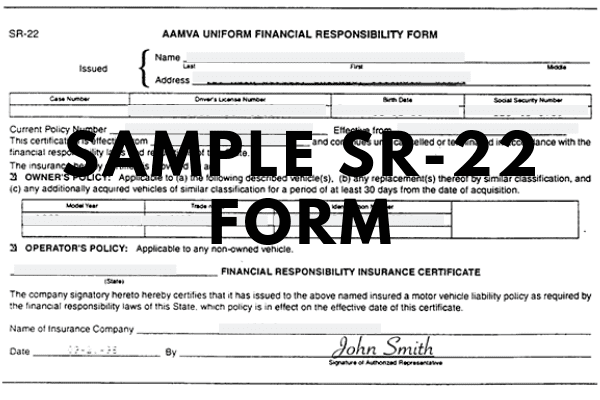
When you have been convicted of a moving violation or accident you will need to show SR-50 Insurance Coverage. A conviction of a moving violation, like a DUI in Indiana, means not only will you need to prove insurance coverage, but your auto insurance rates run the risk of increasing and you could face a possible license suspension. Call Indianapolis criminal defense lawyer Jesse K. Sanchez at 317-721-9858 today.
You look in your rear view mirror and you see the dreaded red and blue lights. Normally, it’s not something that would give you too much stress, but this situation is slightly different. This time you are driving with a suspended license. Never fear, just call Indianapolis defense attorney, Jesse K. Sanchez at (317) 721-9858 or email info@jksanchezlaw.com!
If you have been accused of driving while license suspended then you need to hire a criminal defense lawyer that has experience in helping clients with working with clients that have been accused of driving while suspended. Driving while your license is suspended in Indiana is a serious offense, and getting pulled over with a suspended license should never be taken lightly. Give Indianapolis criminal defense attorney Jesse K. Sanchez a call at (317) 721-9858 today.
The driver’s licenses of Indiana residents may be suspended or revoked for:
In the State of Indiana if you are caught driving while suspended, you will face immediate arrest for operating a vehicle while suspended. On top of the arrest, you will have to pay court costs and a fine which may vary based on the Superior Court of that particular county. The only way to find out the cost of your ticket for driving while suspended is to:
If your license is suspended, DO NOT DRIVE. DON’T DRIVE TO COURT. DON’T DRIVE TO WORK. DON’T DRIVE TO SCHOOL. DO NOT DRIVE.
Call one of the top criminal defense lawyer Indianapolis has to offer. Call Indianapolis criminal defense lawyer Jesse K. Sanchez at (317) 721-9858 for help today.
If you are driving with a suspended license, you probably are wondering what happens if you are caught driving with a suspended license. In one word. Arrest. Driving while suspended is a very serious offense. If your license is suspended and you need to get to a place like work, shopping or church, you should explore getting Specialized Driving Privileges.
Being convicted as a first-timer for driving while suspended will bring about no less than a 90 day license suspension and can cause severe consequences for any future convictions for driving while suspended. A person who operates a motor vehicle on a public street or highway, while the person’s driving privileges are suspended or revoked, will have committed a Class A infraction. Having said that, a second offense of driving while suspended, within 10 years of a prior judgment for driving while suspended, is a crime and will be charged as a Class A misdemeanor. If you are to receive a Class A misdemeanor conviction for driving while suspended, you can expect a possible penalty of up to one year in jail as well as a license suspension of 90 days to 2 years.
A driver record has a history of every type of interaction that resulted in some sort of action that you’ve acquired on your driving records, such as:
If you are unsure if your license is suspended or not, go to the Indiana BMV website and you can view your driving record for free.
Driving with a suspended license in another state is not advised. Not only is driving without a license in Indiana illegal and carries stiff fines and penalties including jail, you would be subject to whatever laws that particular state has regarding driving with a suspended license. The fines and penalties for driving with a suspended license in another state could be far more stiff than in Indiana. If you need to drive for reasons such as going to work, school or transporting your children, you definitely need to apply for a hardship drivers license also known as specialized driving privileges.
You can reinstate your suspended license in Indiana in five easy steps. You begin the process by calling the Indiana BMV at 888-692-6841. Here is the process:
The Reinstatement Requirements section on your Driver Record shows the earliest date your driving privileges can be reinstated. If your reinstatement eligibility date shows “Indefinite,” then you should review the Suspensions Information section. You may have a court-ordered or administrative suspension with outstanding requirements.
If you or your client has recently filed for bankruptcy and the filing includes an unsatisfied judgment that resulted in a driver’s license suspension, download the Bankruptcy – Judgement Checklist.
Your insurance provider must electronically submit proof of financial responsibility (insurance) directly to the BMV. Your Online Driving Record (ODR) will indicate the insurance reinstatement requirement. Only your insurance provider can submit insurance for you. The BMV does not accept insurance policy documents from drivers. While you may have to show proof of insurance to a police officer related to an accident, Indiana law requires drivers involved in certain incidents to provide proof of financial responsibility to the BMV when requested. Showing a police officer your insurance cards will not satisfy the BMV’s requirement.
All insurance reinstatement fees must be paid in full. The exact dollar amount is listed in your Reinstatement Requirements section of your ODR, along with your reinstatement fee access code. You can pay your reinstatement fees by:
Unless your driver’s license is expired, revoked, or invalidated, your driving privileges will be reinstated after all requirements listed on your ODR have been satisfied. You may monitor your license status by periodically reviewing your ODR in your myBMV account free of charge. If your driver’s license was taken by law enforcement as a part of your suspension, then you will need to visit a BMV branch or order a replacement driver’s license by logging into your myBMV account.
Driving with a suspended license is against the law and carries several penalties that could interrupt your life and add additional unnecessary hardships. If you have a suspended drivers license, driving with that suspended license is a bad decision. You can get Specialized Driving Privileges. Contact Indiana criminal defense lawyer Jesse K. Sanchez a call today at (317) 721-9858 today.
Driving is not a right. According to the United States Supreme Court, driving is a privilege. When a person’s license is suspended, more than driving privileges can be lost, as the inability to drive can have an effect on an individual’s ability to work, receive health-related attention, have the ability to the supermarket, or travel to other needed places. Having your drivers license suspended in Indiana can mean some very serious hardships, and because of that, the state began implementing Indiana specialized driving privileges . These privileges allow some individuals with suspended licenses to drive for certain reasons and under specific conditions. If you are looking for an Indianapolis criminal defense lawyer to help you achieve a hardship drivers license, call The Law Office of Indianapolis Criminal Defense Lawyer Jesse K. Sanchez at (317) 721-9858 today.
The State of Indiana began implementing specialized driving privileges in January 2015. The Indiana Hardship License Statute is a the Indiana law that eliminated the initial Indiana hardship license statute and replaced the law a term called “Specialized Driving Privileges.” Indiana Specialized Driving Privileges are available to a wider array of individuals that may need a hardship. This means that you may still be able to obtain driver’s license even if your license has been suspended for:
As you can see the Indiana Hardship License Statute is now more liberal in how the state approaches individuals who have been unable to drive due to a drivers license suspension. Indiana Specialized Driving Privileges for the time being are here to stay. If you’ve lost your license, there is a chance for you to be on the road again. With restrictions of course and that is a much better decision than driving with a suspended license.
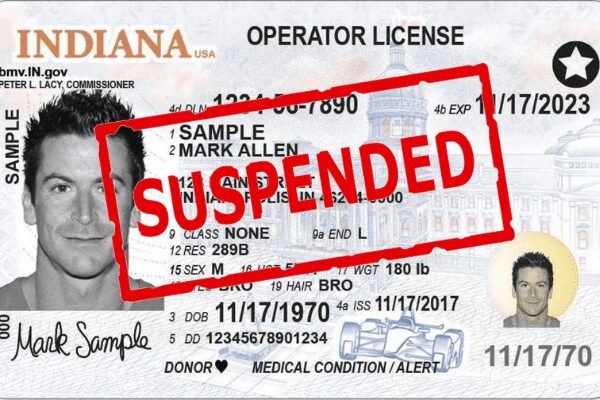
The purpose of a specialized drivers privileges or a hardship license in Indiana is to allow individuals the ability to avoid losing their job while continuing to fulfill their personal obligations that require driving. To get an Indiana hardship drivers license, motorists will be required to prove to the court or the Indiana BMV that they need to drive to:
While many people can obtain specialized driving privileges in Indiana, there is a group of circumstances that prevent a person from obtaining a hardship drivers license. The conditions that prevent you from obtaining specialized driving privileges are:
An Indiana hardship drivers license does not reinstate all suspended driving privileges. Indiana Senate Bill 98 comes with a number of conditions that specify when and where you are able to drive with a specialized driving privileges license.

In order to qualify for specialized driving privileges, you have the legal ability to petition to get your driving privileges reinstated with the assistance of an Indiana specialized privileges attorney. The are several areas that the petition must include the following:
If you have driving privileges that have been suspended by an Indiana court or the Indiana Bureau of Motor Vehicles, you may petition for an Indiana Specialized Driving Privileges waiver. Before you make your petition, go to the myBMV.gov website and access your driving record to verify what items are required before filing. When you view your driving records you will be able to determine if:
If you are in the State of Indiana and would like to obtain specialized driving privileges and would like to hire an Indiana Specialized Driving Privileges attorney to obtain specialized driving privileges, you are probably wondering the cost. The cost of an attorney to get specialized driving privileges in Indiana is anywhere in between $500.00 to $1,500.00 based on the your past driving history.
In addition to a hearing to obtain an Indiana hardship drivers license (specialized driving privileges) is that an Indiana Specialized Driving Privileges Form must be completed in full. Here is a copy of the Indiana Specialized Driving Privileges Form right here.
If you are in need of Indiana specialized driving privileges (SPD) or what’s also called an Indiana hardship drivers license call Indianapolis defense attorney Jesse K. Sanchez at (317) 721-9858 today.
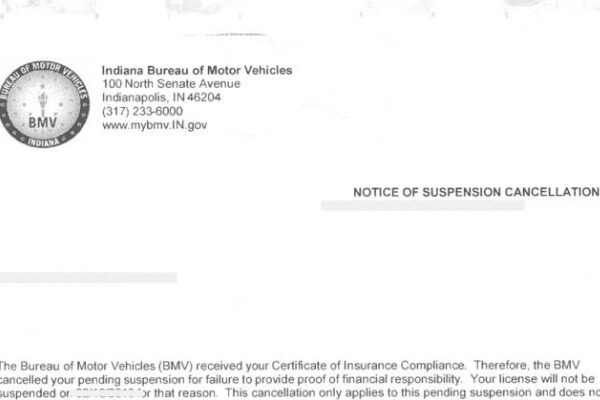
When charges regarding domestic violence are brought up against you, your domestic violence attorney will evaluate the police report of the incident and at that point they may formulate her defense. By studying the police report, your attorney’s goal is to develop up with solution to the charges against you. Being charged with domestic violence in Indiana is a very serious offense and carries with it stiff penalties that could potentially mean serious jail time.
Based on the findings of you lawyers’ investigation, he will conclude the overall seriousness of the charges and the potential penalties that you are facing. Your domestic violence attorney will also discover if you’ve made any statements that are inconsistent with your defense or that could incriminate you. Here are some keys to a good defense against domestic violence charges.
When your lawyer determines that the police report is consistent with your defense, he will gather evidence to reinforce it. Domestic violence defenses fall into several categories, and here are a few:
You did not do it
If you claim is that the victim suffered abuse at the hands of another person, your attorney will look for material to support that claim as follows:
You were defending yourself
If you assert you were without a doubt just trying to defend yourself or your kids, your lawyer will:
Domestic violence can’t be proven against you
If your defense is that there is no proof of the allegations against you or the victim won’t testify, your criminal defense attorney will:
The nature of domestic relationships more often than not means that you may be sharing a home so the right to the possession of your home, the use of your home, and your general property rights will all come into play quickly. Indiana protective order hearings also occur quickly. So it’s important that you move quickly.
The success of the best defense against domestic violence defense charges will depend on the relationship that you have with your attorney. Indianapolis Criminal Defense Lawyer Jesse K. Sanchez is a lawyer that you can trust will represent your rights vigorously. If you have been charged with domestic violence in Indiana give our office a call today at (317) 721-9858 today.
If you’re someone with a criminal record and you would like to get your criminal background sealed then you are looking for an Indiana criminal record expungement. Let’s talk about how to file for expungement in Indiana. Remember, when you need an Indianapolis expungement attorney, call the Law Office of Jesse K. Sanchez at (317) 721-9858 for help today.
Expungement refers to the process of sealing arrest and conviction records. laws that allow people to expunge arrests and convictions from their records. When you are exploring your expungement options, you need to ask yourself the following questions.
Getting an Indiana criminal expungement can have several positive effects upon your life. If you are considering an expungement or your arrest records sealed, call (317) 721-9858 today.
A criminal record expungement in Indiana is different than a criminal record expungement available in any other state. One thing about an expungement in Indiana is that felons are allowed to get their right to own a gun restored. In that instance, Indiana gun rights attorney, Jesse K. Sanchez will be able to help with getting your right to own a gun restored. HOWEVER, if you were convicted of a misdemeanor or felony involving domestic violence, then your right to possess a firearm is not automatically restored by the court. Another key aspect of an expungement in Indiana is how prospective employers are able to treat those members of society that have had their criminal records expunged.
According to the Indiana Second Chance Law or Indiana Expungement Statute, it is considered an unlawful form of discrimination for an employer or prospective employer to
They also are legally prohibited from otherwise discriminating against
any person because of a conviction or arrest record expunged or sealed under the Indiana Second Chance Law.
The Indiana Expungement Law, also known as the Indiana Second Chance Law is an expungement law that is truly the opportunity to legally start with a criminal record that is truly sealed to the general public.
Obtaining an expungement in Indiana for a misdemeanor conviction is not a difficult process with a large number of restrictions. You can qualify for an Indiana criminal record expungement if you have completed the conditions of your sentence and a minimum of five years have passed since the date of your criminal conviction. Once you are ready to learn how to get your misdemeanor in Indiana expunged, call Indiana expungement lawyer Jesse K. Sanchez a call today at (317) 721-9858!
If you are in the need to get a felony expunged in Indiana there’s great news. There are certain felonies that cannot be expunged in Indiana. The felonies that are currently not available for expungement are:
Here is a key point to how serious felony expungements in Indiana are handled. Serious felonies are felonies that are above Level 6 or Class D in nature. In the instance of a serious felony, the court MAY grant expungement, but expungement is not mandatory. For a Level 1, 2, 3, 4 or 5 Felony, or a Class A, B, or C Felony, your expungement is not mandatory.
At your expungement hearing, you or your Indiana Expungement Lawyer will likely have to go to a hearing and argue to the judge why the judge should grant your Indiana criminal record expungement. Any evidence on how you have turned your life around since the conviction, that you can provide to the court, can help persuade the judge to grant your expungement in Indiana.
If your Indiana expungement petition is denied by the judge, you are eligible to reapply for expungement every three years afterwards for the conviction for which the expungement was denied. This clause only applies to felonies OTHER THAN Level 6 or Class D.
Level 6 felonies and Class D felonies are mandatory expungements, which means that the court MUST grant an expungement for Class D or Level 6 felony convictions. Call an Indiana expungement lawyer today.
If you’re wondering what is the Indiana expungement cost then be prepared for the unexpected expense. The cost to expunge a felony, misdemeanor, arrest or pretrial diversion in Indiana can vary greatly based upon the county. Arrests and pretrial diversions are eligible to be expunged at no cost to the applicant. The cost range for an expungement in Indiana AS AN AVERAGE can cost anywhere from $850-$5,000
The Indiana Second Chance Law is a way of how to expunge your record and erase the stigma of having a felony, misdemeanor, arrest or pretrial diversion in Indiana. An Indiana expungement is a way that you can wipe the slate clean and it can be done at a cost that is affordable and attainable for you. When you are ready get a call criminal defense lawyer Jesse K. Sanchez at (317) 721-9858 to get your Indiana felony expunged, a misdemeanor expunged, an arrest or pretrial diversion expunged today.

There are very few crimes when you’re not in need of an Indianapolis criminal defense attorney that handles felonies, if you ask The Law Office of Jesse K. Sanchez, you should hire always contact a criminal defense lawyer.
A felony is defined as a crime that is considered to be more serious in nature. In criminal law, a felony is a category of crimes that are often classified as the most serious type of offense. Felonies can be either violent or nonviolent. In the State of Indiana, a felony is any crime that carries a penalty of more than one year in prison. In Indiana, felonies are designated with the following levels:
In Indiana, misdemeanors receive a maximum sentence of one year or less in the county jail.
Examples of a Felony in Indiana Include:
If you’ve been charged with a felony in Indiana, call The Law Office of Jesse K. Sanchez at (317) 721-9858 today, we are here to help.